
Acompression sleeve is the right first step for mild knee pain, swelling, and arthritis, at 15 to 20 mmHg for daily use or 20 to 30 mmHg for recovery. Knee pads are for impact protection, braces are for instability. The detail most buyers get wrong is size, so this guide starts with the two measurements that decide whether compression works at all.
Every year, millions of Americans deal with knee pain, and sleeves, pads, and braces are the most accessible tools for relief. They look similar on the shelf and do completely different jobs. Here is how to pick, measure, and use the right one.
Knee Pads vs Compression Sleeves vs Knee Braces
| Product | Best For | Support Level | Common Materials |
| Knee pads | Impact protection, contact sports, floor work | Cushioning | Foam, gel, hard plastic |
| Compression sleeve | Pain, swelling, arthritis, running | Gentle, even compression | Neoprene, elastic fabric |
| Knee brace | Instability, post injury recovery | Firm to rigid | Plastic, metal, foam padding |
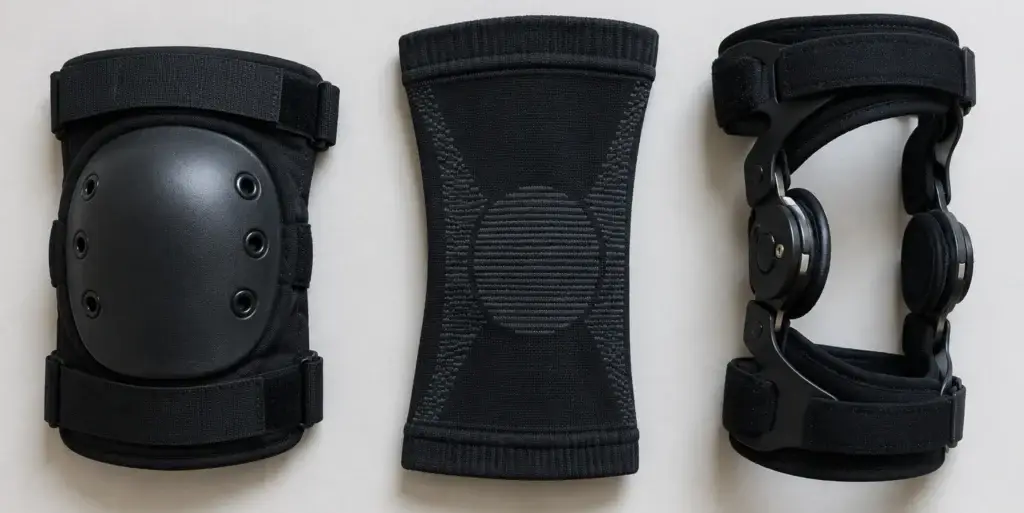
Knee pads absorb direct impact from hard surfaces. A compression sleeve wraps the joint in steady, even pressure that supports circulation and limits swelling. Braces are the rigid option, typically reserved for post surgery recovery or ligament injuries.
If your pain is mild to moderate and there is no instability, a compression sleeve is the right starting point. If your knee buckles or gives way, skip ahead to the brace section, because compression alone will not fix instability.
How to Measure for a Compression Sleeve
A sleeve that is too loose does nothing, and one that is too tight becomes a tourniquet. Two measurements prevent both.
- Stand up and measure the circumference at the center of your kneecap with a soft tape measure, leg straight, muscles relaxed.
- Measure again about 5 to 6 inches above the kneecap, around the lower thigh, since many brands size by both numbers.
Typical size ranges look like this, though every brand publishes its own chart and the brand chart always wins.
| Size | Knee Center Circumference |
| Small | roughly 12 to 14 inches |
| Medium | roughly 14 to 16 inches |
| Large | roughly 16 to 18 inches |
| X-Large | roughly 18 to 20 inches |
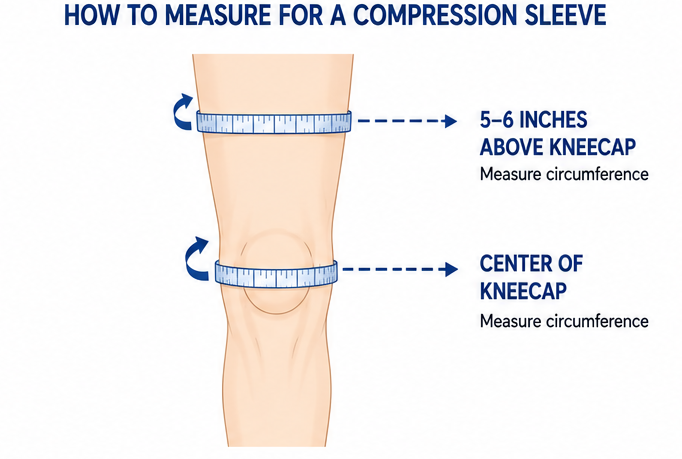
Two fit rules after it arrives. You should be able to slide a finger under the edge, snug but never pinching. And if the sleeve leaves deep red grooves, causes tingling, or the leg below feels cool, it is too small, regardless of what the chart said. Measure in the evening if your knees swell during the day, since a sleeve sized to a morning knee can strangle an evening one.
Which Compression Level Do You Need
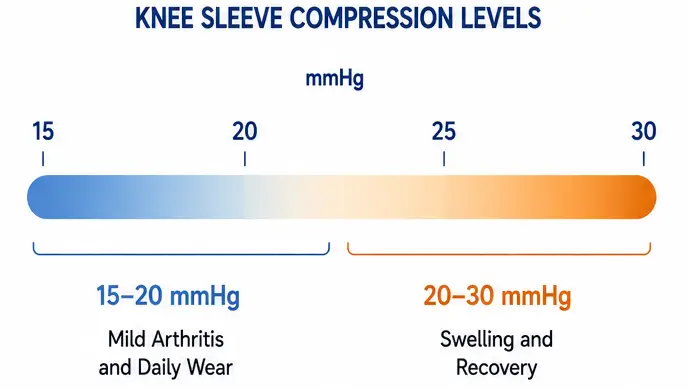
- 15 to 20 mmHg for mild arthritis, everyday swelling, general activity, and all day wear
- 20 to 30 mmHg for more significant swelling, post exercise recovery, and shorter wear windows
Beware of sleeves that advertise “compression” without stating a mmHg number. Unrated sleeves are usually loose elastic tubes, and the number is the difference between a therapeutic product and a sock.
What a Compression Sleeve Actually Does
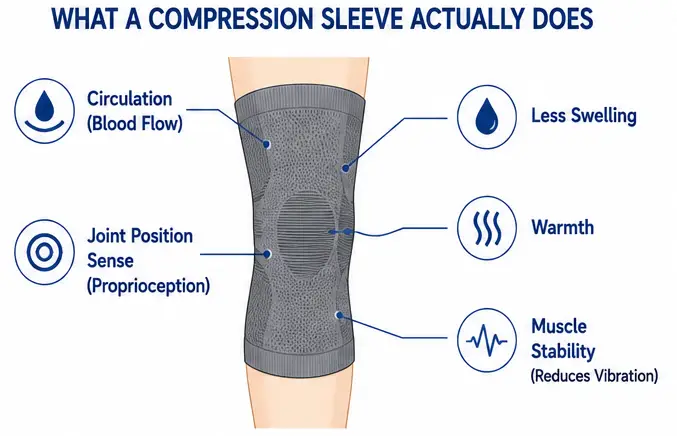
The steady pressure does several things at once.
- Increases blood flow, bringing more oxygen and nutrients to the joint
- Limits fluid pooling that causes post activity swelling
- Improves proprioception, your brain’s sense of the joint’s position
- Provides warmth that loosens stiff joints, especially in the morning
- Dampens muscle vibration during running
A 2025 study found neoprene knee sleeves produced immediate, statistically significant improvements in both balance and pain among patients with knee osteoarthritis, peer reviewed evidence that a sleeve does more than feel supportive.
On materials: neoprene holds warmth and delivers consistent compression, which makes it the default pick for pain and stiffness. If you overheat during exercise or have a latex sensitivity, choose a moisture wicking elastic blend instead.
Matching the Product to Your Situation
Arthritis. A 15 to 20 mmHg sleeve reduces morning stiffness and makes stairs and long standing noticeably easier. Joint pain with arthritis sometimes involves bony changes too, and our guide on bone spurs covers when compression helps around those growths.
Running. A sleeve during long runs limits post run swelling and keeps the joint warm without restricting motion. If knee pain keeps returning despite the sleeve, look downstream: our article on what your feet say about your health covers how lower body alignment loads the knee.
Swelling management. Put the sleeve on before activity, not after, since preventing fluid buildup beats chasing it. For existing swelling, pair compression with ice and elevation for the first 24 to 48 hours, and if the knee is visibly swollen without a clear cause, read our guide on fluid on the knee first, because unexplained effusions need a diagnosis before gear.
Contact sports and floor work. Hard shell pads for wrestling, volleyball, and flooring trades, soft foam for general cushioning. Make sure the pad covers the whole kneecap and the straps do not restrict circulation. Many athletes wear pads over a sleeve for combined protection and support.
Targeted support without a full sleeve. Taping covers specific pain patterns a sleeve cannot isolate, and our guide on how to tape a knee covers the patterns by pain type. Sleeve plus tape is a reasonable combination during return to sport.
Heavy lifting. Knee wraps, the long elastic strips powerlifters use, are a separate category built for maximum compression during short, heavy sets. They are not for all day wear.
When a Sleeve Is Not Enough: The Brace Decision
A sleeve manages pain and swelling. It does not stabilize a joint. Move up to a brace conversation with a doctor or physical therapist when:
- Your knee buckles or gives way under weight
- You are returning from a ligament injury or surgery
- A specific movement direction causes sharp pain, which hinged braces can block
- Sleeve plus strengthening has not controlled symptoms after several weeks
Braces range from hinged supports to rigid post operative models, and fitting them wrong causes real problems, which is why that step deserves professional input, per clinical guidance from the Cleveland Clinic.
Buying Checklist
- mmHg rating stated on the package, matched to your goal
- Sized from your actual measurements, not S/M/L guessing
- Silicone gripper strip at the top edge, which stops the slide down your leg
- Flatlock seams that will not dig behind the knee
- For pads: full kneecap coverage and adjustable straps
- Skip anything promising to “cure” arthritis or “melt” pain, since compression manages symptoms, nothing more
When to See a Doctor for Knee Pain
Sleeves and pads handle mild to moderate problems. Contact your doctor for:
- Severe pain that does not improve after 48 to 72 hours of rest
- Sudden swelling with no clear cause
- A popping sound followed by swelling, or grinding inside the knee
- A knee that buckles or gives way under weight
- Numbness or tingling in the lower leg or foot
- Redness, warmth, or visible skin changes around the joint
A healthcare provider can rule out ligament tears, cartilage damage, or fractures that no sleeve or pad can address.
Frequently Asked Questions
How do I know what size knee compression sleeve to buy?
Measure the circumference at the center of your kneecap standing with the leg straight, and again about 5 to 6 inches above it, then match both numbers to the brand’s own chart. Snug enough to stay put, loose enough to slide a finger under the edge. Tingling, grooves in the skin, or a cool lower leg means it is too small.
What mmHg compression is best for knee pain?
15 to 20 mmHg suits arthritis, mild swelling, and all day wear. 20 to 30 mmHg suits heavier swelling and post exercise recovery in shorter sessions. Avoid sleeves that do not state a mmHg number, because unrated compression is usually no compression.
What is the difference between a knee sleeve and a knee brace?
A sleeve provides even compression for pain, swelling, and warmth, without restricting motion. A brace provides structural support for an unstable or healing joint, sometimes with hinges or rigid stays. Pain and stiffness point to a sleeve. Buckling, giving way, or ligament injury points to a brace and a professional fitting.
Can I wear a knee compression sleeve all day?
Generally yes at 15 to 20 mmHg, as long as you feel no numbness, tingling, or increased pain. Take it off for sleep unless your doctor says otherwise, and give the skin a break during long sedentary stretches, since circulation changes when you sit or lie down for hours.
Are compression knee sleeves good for arthritis?
Yes. The warmth reduces morning stiffness, the pressure limits swelling, and a 2025 study found significant balance and pain improvements in knee osteoarthritis patients wearing neoprene sleeves. Start at 15 to 20 mmHg, and check with your doctor first if you have poor circulation or a vascular condition.
Is running in knee sleeves safe?
Safe and often helpful for mild pain and post run swelling. A sleeve supports and warms the joint without limiting range of motion. If meaningful pain persists despite the sleeve, the cause needs a professional look, and recurring runner’s knee often traces to foot mechanics rather than the knee itself.