
Mild fluid on the knee usually settles within days using rest, ice, compression, and elevation, because your body reabsorbs the fluid once the irritation calms. Draining is a doctor’s procedure called aspiration, never a home project, and it becomes necessary for large, painful, or unexplained effusions. A hot, red, swollen knee with fever is an emergency.
Your knee looks puffy, feels tight, and bending it now takes real effort. That swelling means fluid is building up inside or around the joint. This guide covers what works at home, what only a doctor can do, and how to tell which one your knee needs.
What Is Fluid on the Knee
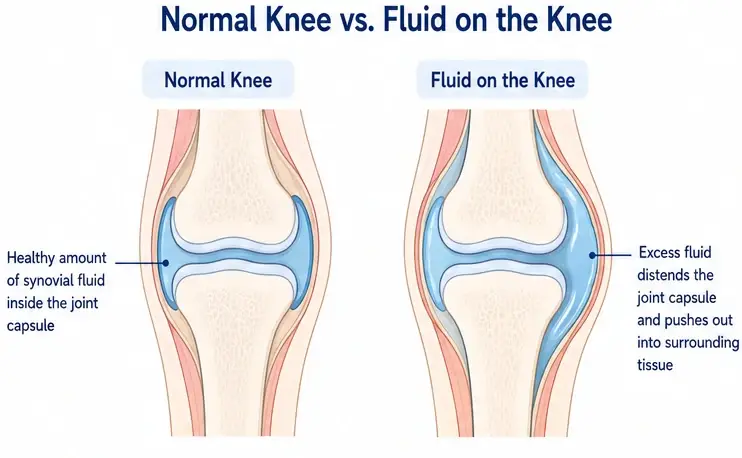
Doctors call this swelling knee effusion, and the Mayo Clinic describes the puffiness as one of the clearest signs that something inside the joint needs attention. The fluid is usually synovial fluid, your knee’s natural lubricant. When the joint gets irritated or injured, the lining produces more than normal, and the extra volume has nowhere to go but out into the surrounding tissue.
You will often notice it more on one side, especially compared with your other knee, along with stiffness, a feeling of fullness, and trouble bending fully. Warmth or mild redness can come with it. “Water on the knee” is the same thing by another name.
What Causes It
- A meniscus tear or torn ligament from a sudden twist or fall
- Osteoarthritis, which wears down cartilage and irritates the joint lining
- Rheumatoid arthritis and other autoimmune conditions that inflame the joint from within
- Gout, where uric acid crystals trigger sudden, painful swelling
- Overuse from running, kneeling, or repetitive bending
- A joint infection, which is rare but needs urgent care
Roughly one in five US adults live with some form of arthritis, according to the CDC, and it remains the most common reason fluid collects over time. Long standing osteoarthritis can also grow bone spurs that add to the irritation. The cause shapes the treatment, which is why unexplained swelling eventually needs a diagnosis, not just ice.
Can You Drain Fluid From Your Knee at Home?
No, and this deserves a direct answer because people search for exactly this. Draining a knee means putting a needle through the joint capsule, and doing that outside a sterile clinical setting risks introducing bacteria into the joint. A joint infection, septic arthritis, can permanently destroy cartilage within days, per NIH research. You would be trading a swollen knee for a surgical emergency.
What home care actually does is help your body reabsorb the fluid on its own. Once the irritation calms down, the joint lining stops overproducing, and the existing fluid drains through your lymphatic system naturally. That is why the boring routine below genuinely works for mild cases, no needle required.
The Home Routine That Works
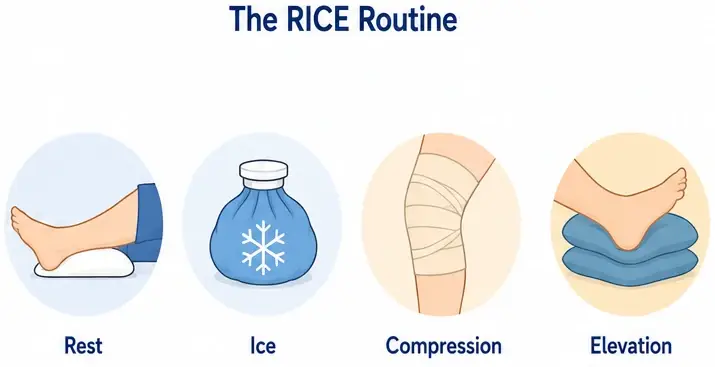
For mild, recent swelling, combine these, since they work better together than alone.
- Rest the joint and skip the activities that strain it
- Ice for 15 to 20 minutes every few hours during the first two days
- Compress with an elastic bandage, snug but never tight enough to affect circulation
- Elevate the leg above heart level so gravity helps the fluid drain
- Take an over the counter anti inflammatory like ibuprofen, following label directions
- Switch to gentle heat after the first couple of days, especially for arthritis related swelling
Support gear helps during the recovery window: a compression sleeve eases pressure during daily activity, and taping the knee correctly adds stability when you return to light movement. Most people see less puffiness within 2 to 5 days. If yours is not shrinking by day three, or is growing, move to the doctor section.
When Draining Becomes Necessary
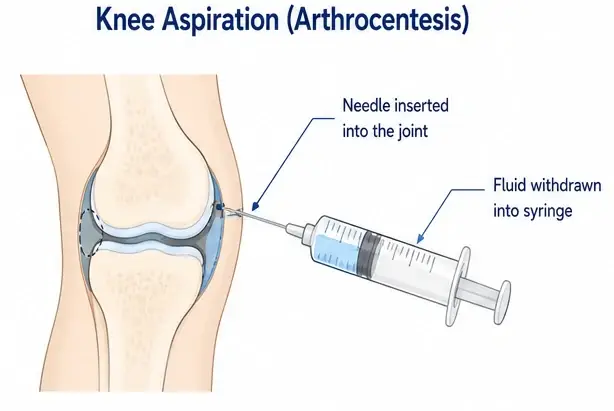
A doctor drains a knee through arthrocentesis, also called joint aspiration. Per Cleveland Clinic, the procedure takes about 10 minutes, uses local numbing, and most people go home the same day with immediate pressure relief.
Doctors reach for aspiration in three situations.
- The effusion is large and painful. Removing the fluid relieves pressure faster than any home method.
- The cause is unclear. The drawn fluid goes to the lab, and its contents identify infection, gout crystals, or inflammatory arthritis.
- Infection is suspected. Here aspiration is diagnostic and urgent.
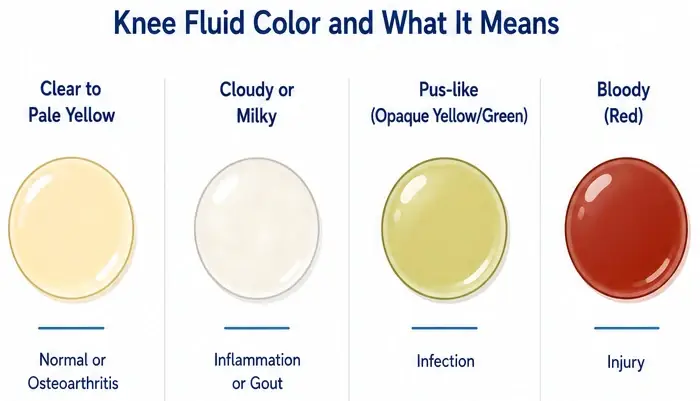
What the fluid’s appearance tells the doctor:
| Fluid Appearance | What It Suggests |
| Clear to pale yellow | Normal synovial fluid, mechanical irritation or osteoarthritis |
| Cloudy or milky | Inflammation, gout, or possible infection |
| Pus like | Joint infection, treated as an emergency |
| Bloody | Injury inside the joint, such as a ligament or meniscus tear |
One honest expectation: aspiration relieves the pressure, but if the underlying cause is untreated, the fluid often returns. That is why a corticosteroid injection frequently follows aspiration for inflammatory causes, and why recurring effusions get imaging like an X ray or MRI to find the structural problem. Physical therapy then rebuilds the strength that protects the joint from repeat flare ups.
For severe arthritis that stops responding to everything, joint replacement eventually enters the conversation. Our guide on hip replacement approaches and recovery shows how those decisions get made.
Most insurance plans cover medically necessary aspiration and injections, though copays and deductibles vary, so ask for an estimate before any procedure.
Is Fluid on the Knee Dangerous?
Mild swelling from overuse is not. But watch closely for these red flags.
- A knee that feels hot, looks red, or comes with fever, which can mean septic arthritis, a true emergency
- Sudden, severe pain without a clear injury
- A knee that buckles, locks, or cannot bear any weight
- Numbness, tingling, or loss of pulse below the knee
- Swelling that keeps growing after two or three days of home care
Any of these means emergency care, not more ice.
Preventing the Next Flare Up
- Maintain a weight that puts less daily stress on the knees
- Strengthen your quadriceps and hamstrings, the muscles that stabilize the joint
- Warm up before exercise and avoid sudden activity spikes
- Wear supportive footwear, especially for sports and long days on your feet
- Use a sleeve or brace during activities that previously triggered swelling
- Treat minor knee pain early instead of pushing through it
Low impact exercise, swimming, cycling, walking, keeps the joint moving without strain. Some people add dry needling or acupuncture alongside standard care for ongoing joint pain, with results that vary person to person. Epsom salt soaks, turmeric, and gentle stretching also show up in the research with mixed but low risk support, useful additions, never replacements.
When to See a Doctor
Book an appointment if swelling lasts more than a week, keeps returning, or limits daily activity. Seek emergency care immediately for fever with a hot red knee, sudden severe pain, or a knee that cannot bear weight.
Frequently Asked Questions
How do you get rid of fluid on the knee fast?
Rest, ice, gentle compression, and elevating the leg above heart level clear most mild swelling within a few days by helping your body reabsorb the fluid. The genuinely fast option is aspiration at a doctor’s office, a 10 minute procedure that relieves pressure the same day, reserved for large or unexplained effusions.
Can I drain fluid from my knee at home?
No. Draining requires a needle through the joint capsule, and outside a sterile setting that risks introducing an infection that can permanently damage cartilage within days. Home care works by helping your body reabsorb the fluid instead. If the swelling is bad enough that you are considering a needle, it is bad enough for a same week doctor visit.
What does the color of knee fluid mean?
Clear to pale yellow fluid suggests mechanical irritation or osteoarthritis. Cloudy fluid points to inflammation, gout, or infection. Pus like fluid means a joint infection needing emergency treatment, and bloody fluid suggests an internal injury like a meniscus or ligament tear. This is exactly why doctors send aspirated fluid to the lab.
Does knee fluid come back after draining?
Often, yes, if the underlying cause is untreated. Aspiration relieves pressure but does not fix arthritis, gout, or a torn meniscus. That is why doctors pair it with lab testing, injections, physical therapy, or imaging to address whatever is producing the fluid.
Can fluid on the knee go away on its own?
Mild swelling from minor overuse often settles with rest alone within days. Fluid tied to arthritis, gout, or infection usually needs targeted treatment. A week of swelling, or repeat episodes, means it is time for a diagnosis.
What causes fluid to build up in the knee joint?
Injury, osteoarthritis, rheumatoid arthritis, gout, overuse, and rarely infection. The joint lining responds to any irritation by producing extra synovial fluid, so the swelling is a symptom, and the cause decides the treatment.