
Abruised heel is a fat pad contusion under the heel bone, heals in one to three weeks with rest, ice, heel cups, and cushioned shoes. A bone bruise underneath can stretch that to six weeks. Before treating it yourself, squeeze the sides of your heel: sharp pain on the squeeze suggests a stress fracture, which needs an X-ray, not home care.
The pain sits right at the base of your heel and sharpens with every step. Whether it came from a hard landing, long days on concrete, or a jump in running mileage, the plan below covers treatment, the conditions that mimic it, and the part most guides skip: how to get back to running without restarting the injury.
What Is a Bruised Heel?
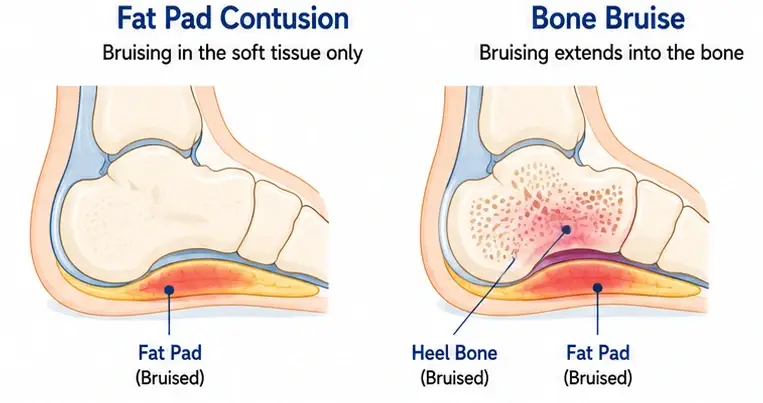
Your heel bone, the calcaneus, sits inside a thick cushion of fatty tissue that absorbs the shock of every step. When pressure hits that pad too hard or too often, it bruises. Doctors call it a fat pad contusion.
Sometimes only the soft tissue bruises. Other times the bone underneath takes the impact too, a bone bruise, which feels sharper and takes noticeably longer to heal. Most people with a soft tissue bruised heel recover fully within two to three weeks when treatment starts early.
Common Causes
- Landing hard on your heel after a jump or fall
- Running or walking long periods on concrete or asphalt
- Stepping on a sharp or uneven object like a rock or root
- Switching suddenly from cushioned shoes to flat or minimal footwear
- Increasing mileage or intensity too quickly without rest
- Old shoes that no longer absorb shock
Age matters: the heel’s fat pad naturally thins over the years, bruising easier and recovering slower. Extra body weight adds mechanical load with every step, and standing occupations like nursing and retail raise the risk over time. Athletes and distance runners carry the highest risk overall.
Symptoms to Watch For
- Deep, aching pain directly beneath the heel bone
- Tenderness when pressing the bottom of the foot
- Swelling around the heel
- A red or purple bruise on the skin, though deep bruising often shows nothing at all
- Pain that grows worse the longer you stay on your feet
- Warmth over the heel from the inflammatory response
The pain pattern tells the story: dull and achy at rest, sharper the moment weight goes back on, and worse at the end of a long day on your feet. That last detail matters for diagnosis, as the comparison below shows. For the bigger picture of what foot signals mean, our guide on what your feet say about your health goes deeper.
Is It Really a Bruised Heel? The Look-Alikes
| Condition | Primary Pain Location | Worst Time | Key Sign |
| Bruised heel | Bottom of heel bone | During and after activity | Deep tenderness or visible bruise |
| Plantar fasciitis | Heel and along the arch | First morning steps | Eases after a few minutes of walking |
| Heel stress fracture | Inside or base of heel bone | Worsens consistently with activity | Sharp pain when heel sides are squeezed |
| Bone spur | Heel or arch | After prolonged standing | Pinpoint pain at one fixed spot |
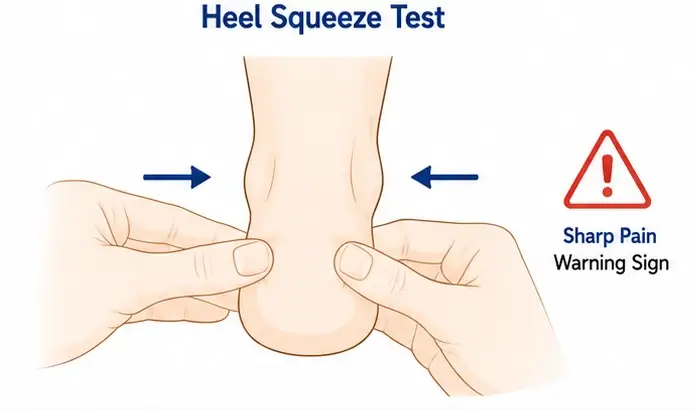
Two checks sort most cases. The morning test: plantar fasciitis is worst on the first steps of the day and eases as you move, while a bruised heel worsens the longer you stay on your feet. The squeeze test: press the sides of your heel between thumb and fingers. Sharp, bone level pain on the squeeze points toward a stress fracture, and that means an X-ray before any home treatment plan, not after three failed weeks of it.
Treatment: The First Two Weeks
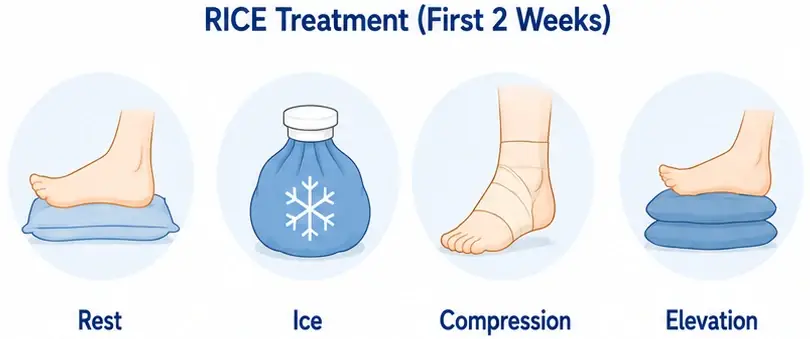
The RICE method is the standard first response.
Rest. Take weight off the heel as much as possible for the first few days. Necessary walking is fine, running and jumping are not.
Ice. 15 to 20 minutes, three times a day, wrapped in a thin cloth, consistently through the first week.
Compression. Tape the heel firmly with athletic tape or a heel wrap to support the fat pad and limit swelling.
Elevation. Foot on a pillow above heart level whenever you sit or lie down.
Beyond RICE:
- Over the counter anti inflammatories like ibuprofen for pain and swelling
- A silicone heel cup or gel pad in every shoe you wear, immediately, this is the single highest value purchase for this injury
- Cushioned, supportive shoes only, no flat footwear until healed
- No barefoot walking on tile, hardwood, or concrete
Soft tissue cases improve meaningfully within one to three weeks, per Healthline’s overview. Bone bruises can take up to six weeks.
The Return to Running Plan
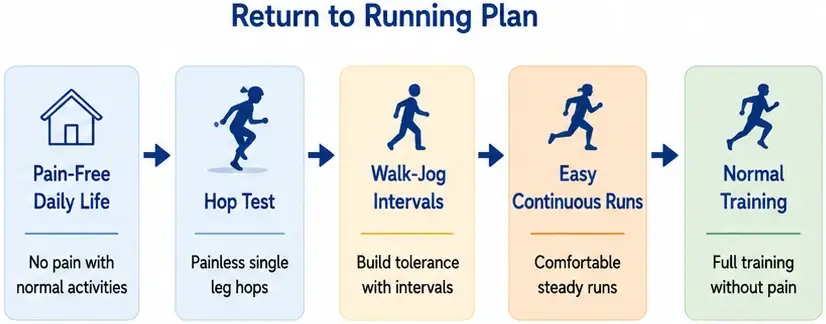
The mistake runners make is returning by the calendar instead of by criteria. Dates lie, tests do not. Move to each phase only when you pass the previous one, and drop back a phase if pain returns above a mild 2 out of 10.
Phase 1: Pain free daily life. You can walk all day in cushioned shoes, with heel cups in, at zero to minimal pain. Until then, no running of any kind. Cross train with cycling or swimming to hold fitness, since neither loads the heel.
Phase 2: The hop test. Barefoot on a soft surface, hop gently on the injured foot ten times. Pain free hopping means the fat pad can handle impact again. Pain means stay in Phase 1 another few days.
Phase 3: Walk-jog intervals. On a soft surface, grass or track, alternate 3 minutes walking with 1 minute easy jogging for 20 minutes, every other day. Heel cups stay in your running shoes. After two pain free sessions, flip the ratio toward jogging.
Phase 4: Easy continuous runs. 20 to 30 minutes easy, every other day, soft surfaces still preferred. No speed work, no hills, no consecutive days yet.
Phase 5: Normal training. Rebuild toward your old mileage at no more than 10 percent added per week, and reintroduce intensity last. Keep the heel cups for at least a month after you feel fully normal, since the fat pad remains vulnerable while it finishes recovering.
The whole progression typically takes two to four weeks after daily life is pain free. Rushing it is how a three week injury becomes a three month one.
Preventing the Next One
- Replace running shoes every 300 to 500 miles
- Keep silicone heel cups or cushioned insoles in both athletic and everyday shoes
- Increase mileage gradually, the 10 percent per week rule
- Warm up before high impact exercise
- Avoid barefoot walking on hard floors, especially at home
- Stretch calves and feet daily to keep surrounding tissue resilient
If foot discomfort keeps returning in different spots, the pattern itself is information: our article on pain in the second toe shows how pain location maps to cause.
When to See a Doctor
- Pain not improving after two to three weeks of consistent home treatment
- Severe swelling spreading beyond the heel
- Inability to bear any weight
- Sharp pain on the heel squeeze test
- Numbness, tingling, or shooting sensations through the foot
- A pop or snap felt at the moment of injury
A podiatrist can X-ray for a calcaneal stress fracture and prescribe custom orthotics for persistent cases. If a fracture does turn up and travel is on your calendar, our guide on flying with broken bones covers what that means for your plans. And if the injury came alongside toe trauma from the same impact, our article on dislocated toe treatment covers that companion injury.
Frequently Asked Questions
How long does a bruised heel take to heal?
Soft tissue cases heal in one to three weeks with rest, ice, and heel cups. A bone bruise underneath extends recovery to as much as six weeks. Returning to impact activity before healing finishes is the most common way people double their recovery time.
When can I run again after a bruised heel?
When you pass two tests, not when a date arrives: walking all day pain free, then hopping ten times on the injured foot without pain. From there, progress through walk-jog intervals to easy runs over two to four weeks, on soft surfaces with heel cups in, backing off if pain climbs above mild.
Can I walk on a bruised heel?
Yes, when pain stays manageable, in cushioned shoes with a silicone heel cup. Cut standing time on hard surfaces, and never go barefoot on tile or concrete until the pain has fully cleared.
How do I know it is not a stress fracture?
Squeeze the sides of your heel between your thumb and fingers. A bruised fat pad hurts when pressed from underneath, while a stress fracture typically hurts sharply on that side squeeze and worsens steadily with every activity session. A positive squeeze test or pain that ramps instead of settling deserves an X-ray.
Is a bruised heel the same as plantar fasciitis?
No. Plantar fasciitis is inflammation of the tissue band along the arch, classically worst on the first morning steps and easing as you move. A bruised heel worsens the longer you stay on your feet and centers directly under the heel bone. The treatments overlap but the timelines and mechanics differ.
What does a bruised heel feel like?
Deep, aching pain directly under the heel bone that sharpens each time weight lands on it, with tenderness when pressed and sometimes mild swelling. Visible discoloration appears in some cases, but deep bruising often shows nothing on the skin at all.