
Shoes cause blisters through one mechanism, friction against your skin. Stop the friction and you stop the blister. The right fix depends on the shoe, better fit and break-in for new shoes, moisture wicking socks for running shoes, and padding or taping for heels and boots. Most blisters are fully preventable.
A single blister can turn a good walk or run into real pain. Blisters form when friction repeatedly separates the outer layers of your skin, and fluid fills that gap to protect the tissue underneath. The habits below prevent most of them entirely.
Why Shoes Cause Blisters on Your Feet
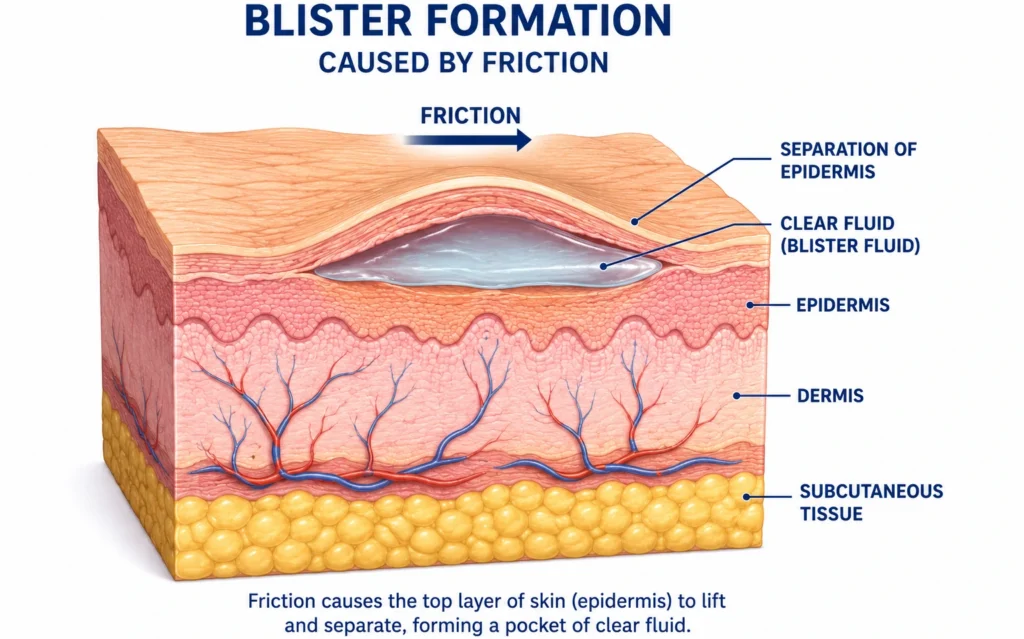
Friction is the main driver. When your shoe rubs against your skin over and over, the skin layers pull apart. Fluid then fills that gap to protect the tissue underneath. The result is the painful, fluid filled pocket known as a blister.
Several things raise your risk:
- Shoes that are too tight or too loose
- New shoes worn for long periods too soon
- Wet or sweaty feet
- Cotton socks that hold moisture against the skin
- Long walks, hikes, or runs without any foot protection
Any of these factors can quickly cause a blister to form on your heel, toes, or the sole.
Learn to Catch a Hotspot Before It Becomes a Blister
Every blister announces itself first. That warning sign is called a hotspot, a patch of skin that suddenly feels warm, tender, or slightly burning while you walk.
A hotspot means friction damage has started but the skin has not separated yet. If you act at this stage, you prevent the blister completely. Stop, take the shoe off, and cover the warm spot with tape, a blister plaster, or moleskin before continuing.
Ignoring a hotspot for even another hour of walking is usually the difference between needing a strip of tape and needing a week of healing. Hikers and runners who stay blister free are almost always the ones who stop at the first sign of warmth.
How to Stop Shoes from Blistering Before They Start
Prevention is always easier than treatment. Fortunately, a few simple changes to your routine cut your blister risk dramatically.
Choose the Right Shoe Fit to Prevent Blistering
A well fitted shoe makes more difference than almost anything else. Your shoes should leave about a thumb’s width of space between your longest toe and the front of the shoe. Shoes that are too tight crush your toes and cause rubbing. Shoes that are too loose let your foot slide around inside. Always try shoes on later in the day, since feet tend to swell as the hours pass.
Break In New Shoes the Right Way
New shoes are one of the most common causes of heel and toe blisters. Do not wear them for a full day right away. Instead, start with short trips and slowly build up your wear time over one to two weeks. This gives the material time to soften and adjust to your foot’s shape. That gradual break in process is one of the most reliable ways to stop shoes from blistering your skin.
Pick the Right Socks for Blister Prevention
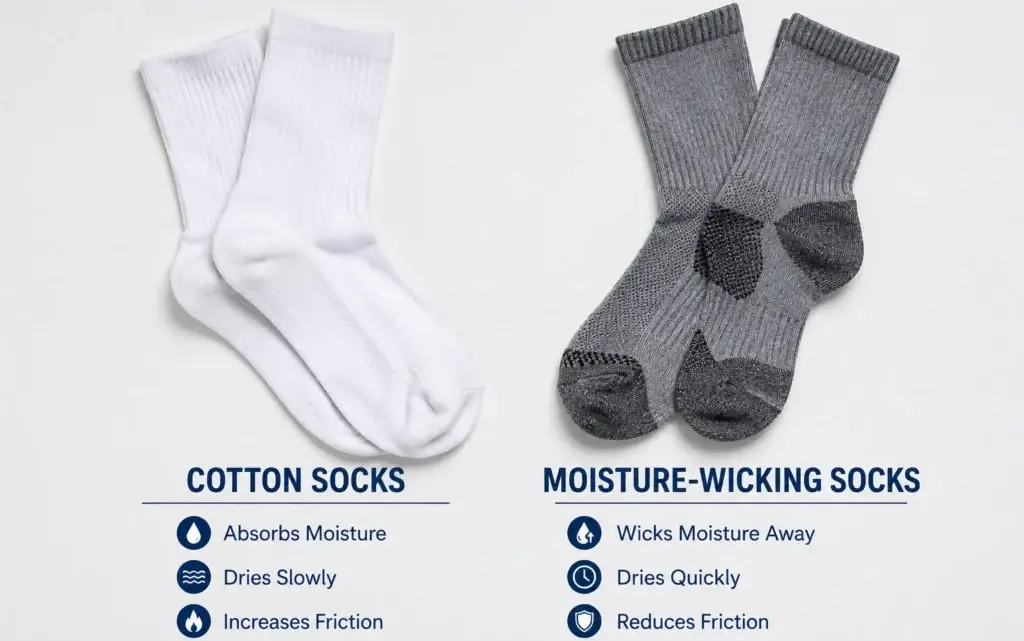
Your sock choice matters more than most people expect. Cotton socks absorb sweat and trap it directly against your skin. That trapped moisture increases friction and leads to blisters. Instead, choose moisture wicking synthetic socks or nylon blends. These pull sweat away from the foot and keep the skin drier throughout the day. The American Academy of Dermatology also recommends wearing two pairs of thin socks if one pair still causes rubbing. If seams tend to rub your toes, seamless socks are worth trying too.
Blister Fixes by Shoe Type
Different shoes create friction in different places, so the fix changes with the footwear.
High Heels and Dress Shoes
Heels concentrate pressure on two spots, the back of the heel and the ball of the foot. A stiff heel counter also rubs skin that bare legs or thin stockings leave unprotected.
Use gel heel liners inside the heel cup and a cushioned pad under the ball of the foot. Apply an anti chafe balm or tape to the back of the heel before a long event. For new dress shoes, wear them at home with socks for a few evenings before their first full day out.
Running and Walking Shoes
Movement and sweat are the problem here, not stiffness. The foot slides forward and sideways with every stride, and damp skin blisters faster.
Moisture wicking socks are the single biggest fix. Add petroleum jelly or balm on known rub spots before long sessions, and make sure the toe box leaves room for your foot to spread on impact. Lacing matters too. A runner’s loop through the top eyelets locks the heel in place and stops forward slide.
Boots and Hiking Boots
Boots blister through weight, stiff material, and long hours. The heel is the classic hotspot because stiff leather takes weeks to shape itself to your foot.
Break boots in over two to three weeks of short wears before any long day. Tape or moleskin your heels preemptively on the first few outings. Wear a thin liner sock under a thicker outer sock so the friction happens between the sock layers instead of against your skin.
Sandals and Flats
Straps and bare skin mean friction has no sock barrier at all. Blisters form along strap lines and between toes.
Soften new straps by flexing them by hand, apply balm along strap contact lines, and alternate pairs on consecutive days so pressure never lands on the same spot two days in a row.
How to Apply Tape and Moleskin the Right Way
Padding only works when it is applied correctly, and most people do it wrong by sticking a pad directly on top of a forming blister.
For a hotspot that has not blistered yet. Clean and dry the skin fully. Apply a strip of surgical paper tape or kinesiology tape flat over the spot with no wrinkles. A wrinkled tape edge creates its own friction line.
For a sensitive spot you want to protect. Cut moleskin into a donut shape with a hole slightly larger than the tender area. Stick the donut around the spot so pressure lands on the moleskin ring, not the skin. Cover the hole with a smaller flat piece if the shoe still touches it.
For an already formed blister. Use a hydrocolloid blister plaster instead of tape. It cushions, seals out bacteria, and stays on for days, and pulling regular tape off a blister roof can tear the skin.
Carry a small strip of tape or two plasters in your bag on long days. The best taping job is the one you can do the moment a hotspot starts.
Blisters on Heels, Toes, and the Bottom of Your Feet
Where a blister forms usually tells you something specific about the cause. Identifying that cause helps you fix the problem at the root.
Blister on Heel
A blister on the heel almost always means the back of the shoe is rubbing too much. This is especially common with new footwear. Try heel grip inserts or a cushioned insole to reduce that contact. Breaking in shoes slowly is the most reliable long term fix.
Blisters on Toes
Blisters on toes usually signal that your shoes are too narrow or too short. Check that your toes have enough room to move freely. Seamless socks and individual toe cushions can also offer useful protection. Our article on pain in the 2nd toe: causes and treatment covers related toe problems worth ruling out.
Blisters on Bottom of Feet
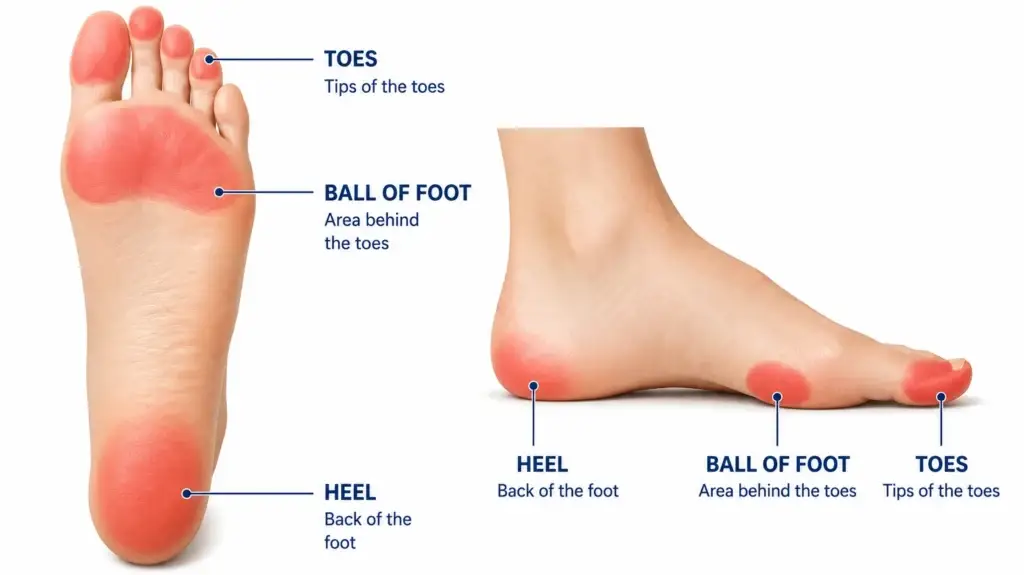
Blisters on the bottom of feet are most common in runners and hikers. Repeated pressure on the ball of the foot is usually the cause. Gel insoles and well cushioned shoes help reduce that impact point by point. If blisters keep forming in the same spot, your gait may be the real cause. Our guide on pronation, overpronation and supination explains how to check whether your foot rolls too far in or out with each step.
Our guide on what your feet say about your health explains other foot signals worth paying attention to.
Use Petroleum Jelly and Blister Barriers to Stop Shoes from Blistering
Reducing friction directly is one of the most effective blister prevention strategies available. Petroleum jelly is a simple, affordable product that works very well for this purpose.
Apply a thin layer of petroleum jelly to any area that tends to rub before you put your shoes on. Common spots are the heel, the ball of the foot, and the sides of the big and little toes. The jelly creates a slippery barrier that significantly cuts down on friction.
Other protective options include:
- Moleskin pads placed in a donut shape around the sensitive area
- Gel blister cushions over friction prone spots
- Anti chafe balms or blister prevention sticks
- Foot powder or antiperspirant applied to the heel and ball of the foot
According to Cleveland Clinic, applying antiperspirant to your feet before athletic activity lowers sweating. It also reduces blister formation in runners and hikers as a result.
Blister Care for Feet and How to Treat a Blister Fast
Even with good prevention, blisters sometimes happen. Treating them quickly reduces pain and lowers the risk of infection.
| Situation | What To Do |
| Small, painless blister | Leave it alone and cover with a bandage |
| Large or very painful blister | Drain carefully at the edge using a sterile needle |
| Broken blister | Keep it clean, cover loosely, and let it air when possible |
| Signs of infection | See a doctor without delay |
How to Heal a Foot Blister Overnight
Cover the blister with a gel or hydrocolloid blister bandage before bed. These bandages cushion the area and support the skin’s natural healing process. Most people notice clear improvement after just one night of proper coverage. Keep the area clean and avoid popping the blister whenever possible.
Should You Pop a Blister?
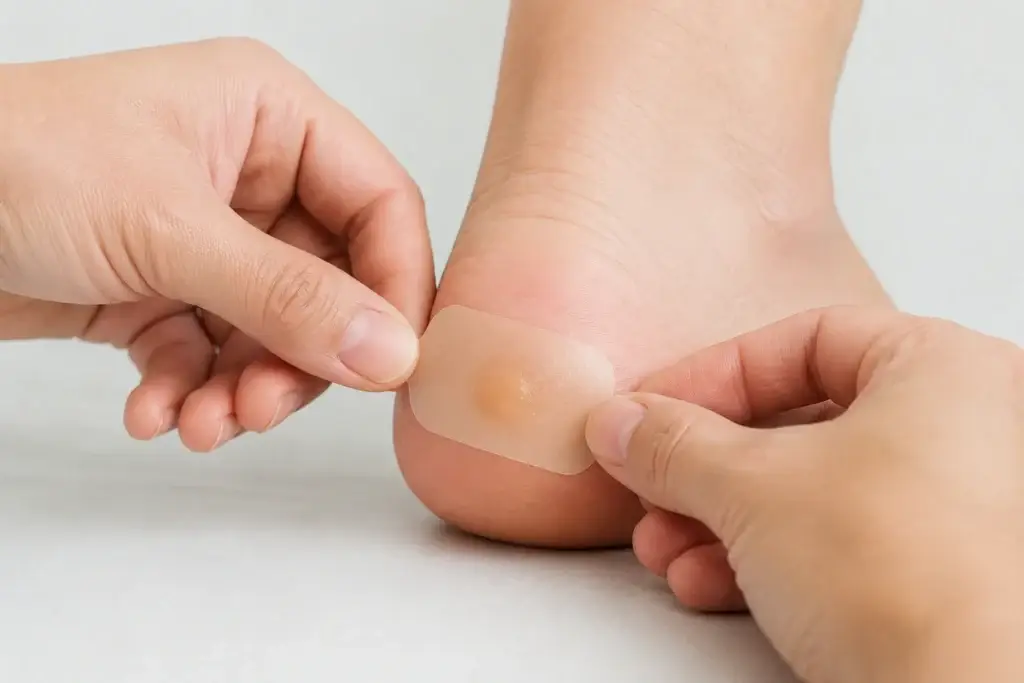
Most of the time, no. The fluid inside a blister acts as a natural cushion. It also protects new skin as it forms underneath. If the blister is very large or too painful to leave alone, drain it from the edge using a sterilized needle. Do not pierce the center. Leave the roof of the blister in place and cover with a clean sterile bandage right after.
Our article on bruised heel causes, symptoms, and treatment covers another common source of heel pain that sometimes develops in the same area.
Running Blisters and What Runners Need to Know
Runners face a higher blister risk because of the heat, sweat, and repetitive motion involved. Certain habits, however, make a real difference in blister prevention for runners.
- Apply petroleum jelly to your heels, toes, and arches before every long run
- Wear moisture wicking, seamless running socks every time you train
- Replace your running shoes every 300 to 500 miles
- Choose running shoes with a wider toe box if toe blisters keep returning
- Use an anti chafe balm on any spot that tends to rub during your runs
Starting these habits before your training runs is far more effective than treating blisters after the fact. Our article on why your feet get itchy covers a related foot issue that runners commonly experience as well.
When to See a Doctor for Foot Blisters
Most blisters heal on their own within one to two weeks. However, some situations call for professional medical attention.
See a doctor if you notice any of the following:
- The blister fluid is cloudy, yellow, or green
- Red or purple streaks spreading outward from the blister
- Increasing pain, warmth, or swelling around the area
- Fever appearing alongside the blister
- You have diabetes or poor circulation in your feet
People with diabetes need to take foot blisters especially seriously. Even a small blister can become a significant wound due to reduced sensation and slower healing. If you also have persistent foot pain near the blister, our article on bone spur symptoms, causes, and treatment covers related foot conditions worth knowing about.
Knowing how to stop shoes from blistering your feet comes down to a few consistent habits. Fitting your shoes properly, wearing the right socks, catching hotspots early, and applying petroleum jelly or tape to friction prone spots can prevent most blisters entirely. When a blister does form, fast and clean blister care gets you back on track sooner.
Frequently Asked Questions
How do I stop my shoes from giving me blisters?
Start with shoes that fit well and give your toes enough room. Wear moisture wicking socks rather than cotton. Apply petroleum jelly or an anti chafe balm to spots that tend to rub, such as the heel and the sides of your toes. Moleskin pads and gel cushions add an extra layer of protection on longer walks or runs.
How do I stop high heels from giving me blisters?
Gel heel liners inside the heel cup and a cushioned pad under the ball of the foot address the two highest pressure spots. Tape or an anti chafe balm on the back of the heel protects bare skin before a long event. Breaking in new heels at home for a few short evenings also softens the stiff heel counter before its first full day out.
What is a hotspot and how do I treat it?
A hotspot is the warning stage before a blister, a patch of skin that feels warm, tender, or burning while you walk. Friction damage has started but the skin has not separated yet. Stop as soon as you feel one, and cover the spot with tape, moleskin, or a blister plaster. Acting at the hotspot stage prevents the blister completely.
How do you heal blisters on feet overnight?
Cover the blister with a hydrocolloid or gel blister bandage before bed. These bandages create a moist environment that speeds up skin healing. Avoid popping the blister if you can. By morning, most blisters treated this way show clear improvement in both size and pain.
Should you pop a blister on your foot?
Most doctors recommend leaving blisters alone. The fluid inside protects the healing skin beneath it. If the blister is very large or too painful, you can drain it from the edge using a sterilized needle. Always leave the roof in place and cover with a clean bandage right after.
Does petroleum jelly help prevent blisters?
Yes. Petroleum jelly reduces the friction between your skin and your shoe by creating a protective, slippery layer. Apply it to the heel, ball of the foot, and the sides of your toes before putting your shoes on. This works especially well when breaking in new shoes or heading out for a long run.
What causes blisters on the bottom of feet?
Repeated pressure and friction from walking, running, or hiking are the main causes. Shoes without enough cushioning and cotton socks that trap sweat both raise the risk. Gel insoles and moisture wicking socks reduce both the impact and the moisture that lead to blisters on the sole.
When should I see a doctor for a blister?
See a doctor if the blister has cloudy or colored fluid, red streaks, growing pain, or swelling around it. Anyone with diabetes should see a doctor for any foot blister, even a small one. Slower healing and reduced sensation make infection a more serious risk for people with diabetes.
Written by Tejanshu Jaluthria, Editor, Banner Health. Last updated: July 14, 2026.
Every claim in this article is checked against the sources linked throughout, including the NIH, FDA, WHO, the American Academy of Orthopaedic Surgeons and Mayo Clinic. Read more about how we review our content.
Disclaimer: The information on this website is for general educational purposes only and is not a substitute for professional medical advice, diagnosis, or treatment. Always talk with your doctor or another qualified healthcare provider about any questions you have regarding a medical condition. Never ignore professional medical advice or delay seeking it because of something you read on the internet.